 Post by
If you know about the dark web, you must know about “the Hidden Wiki.”
Well, most of what you have read is either incomplete, outdated, or flat-out wrong.
In this guide, we will share everything about this directory, how it came to exist, what’s really on it, and why it matters far beyond the sensational headlines.
What Is the Hidden Wiki?
The Hidden Wiki is a directory of curated links to websites that exist on the Tor network, also known as the dark web. Think of it the way you’d think of an old-school web directory like DMOZ or Yahoo Directory, except instead of listing regular websites, it points to .onion addresses that are only accessible through the Tor browser.
The reason it’s called “hidden” isn’t because someone buried it under layers of secrecy. It is because the Tor network itself is designed to keep both users and website operators anonymous. Websites hosted on Tor don’t show up in Google, Bing, or any traditional search engine. They live on an entirely separate layer of the internet that requires specific software to access.
The Hidden Wiki acts as a starting point, a rough map, for navigating that layer.
It’s not one single website run by one organization. It’s been copied, mirrored, forked, and rebuilt dozens of times over the years by different administrators. Some versions are maintained by people with genuinely good intentions around privacy and free speech. Others are maintained by people who are far less scrupulous. That distinction matters a lot, and we’ll get into it throughout this article.
How the Hidden Wiki Started?
The original Hidden Wiki appeared around 2007, during the early years of Tor’s public adoption. At the time, the deep web and dark web was significantly smaller and less notorious. Tor was primarily used by privacy advocates, political dissidents, journalists working in repressive regimes, and technically curious people who wanted to understand anonymous communication.
Because .onion addresses are strings of random characters like:
zqktlwiuavvvqqt4xt.onion
That’s why navigating the Tor network was genuinely difficult. The Hidden Wiki solved that problem by collecting links and organizing them by category. Not unlike how Wikipedia organizes knowledge, which is clearly where the name came from.
The early Hidden Wiki ran on MediaWiki, the same software that powers Wikipedia, and it was openly editable. Anyone could add a link, edit a description, or create a new category. This open editing model made it grow quickly, but it also made it chaotic. As Tor gained popularity through the late 2000s and early 2010s, the Hidden Wiki started attracting a darker crowd.
By 2011, when Tor usage surged following news coverage of whistleblowing platforms and internet censorship protests, the Hidden Wiki had become genuinely notorious. It was the subject of news stories, government investigations, and heated debates about internet freedom. In 2014, following Operation Onymous, a coordinated law enforcement takedown of dark web markets and infrastructure. Many versions of the Hidden Wiki were seized or went offline.
But like most things on the internet, it didn’t stay down. Mirror sites sprang up almost immediately, and the cycle continues to this day. There is no single “official” Hidden Wiki. There are dozens of active mirrors at any given time, varying in content quality, safety, and legitimacy.
How the Tor Network Works
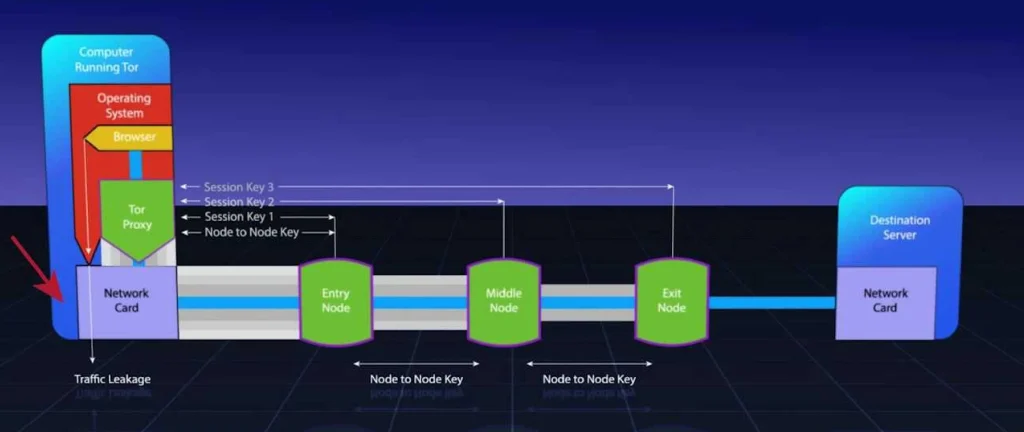
To understand the Hidden Wiki properly, you need a basic understanding of how Tor functions. Because the technology shapes everything about what the Hidden Wiki is and how people use it.
Tor stands for The Onion Router, a name that comes from its layered encryption system. When you use the Tor browser to visit a website, your connection doesn’t travel directly from your device to that site. Instead, it bounces through a series of volunteer-operated servers called relays, typically three of them. Each relay only knows the previous hop and the next hop in the chain, meaning no single relay knows both who you are and what you’re accessing.
The result is a high level of anonymity. Your internet service provider can see that you’re using Tor, but not what you’re doing on it. The website you visit can see that someone is connecting through Tor, but not who that person is.
Websites hosted as .onion services take this a step further. The server itself is hidden; its physical location is concealed through a similar routing process. This makes it extremely difficult for law enforcement or adversaries to locate and shut down a .onion website, which is why they’re used by both legitimate privacy-conscious operators and by criminals.
The Hidden Wiki indexes both types.
What is Listed on the Hidden Wiki

This is where things get complicated, because the answer varies depending on which version of the Hidden Wiki you’re looking at and when you’re looking at it.
Generally speaking, most versions of the Hidden Wiki include links organized into broad categories. Here’s an honest look at what those categories typically contain.
Privacy and Security tools
It links to Tor-compatible email services, encrypted messaging platforms, VPN providers that accept anonymous payment, and privacy-focused operating systems are common staples. These are genuinely useful resources for people who have legitimate reasons to protect their digital identity.
News, journalism, and whistleblowing platforms
The Hidden Wiki has historically linked to mirrors of news organizations blocked in certain countries, secure submission platforms for whistleblowers, and forums where journalists and activists operating under authoritarian governments communicate. SecureDrop, the whistleblowing tool used by major news organizations, has been listed in various versions.
Political and ideological forums
Some of these are platforms for political speech that’s been censored elsewhere — which can be genuinely important in contexts like Iran, China, Russia, or Belarus. Others are forums for extremist ideology that have been deplatformed from the regular internet for violating terms of service. The Hidden Wiki doesn’t typically make a distinction.
Financial services
It represents a large and varied category. Cryptocurrency exchanges that don’t require identity verification, tumbling services designed to obscure the trail of cryptocurrency transactions, and, in less legitimate versions, outright fraud services and counterfeit currency listings appear here. The legitimacy of what’s listed varies enormously.
Marketplaces
markets for legal goods sold anonymously to markets for illegal drugs, stolen data, counterfeit documents, and other contraband. The most notorious markets like Silk Road, AlphaBay, and Hansa were regularly linked in their time. Law enforcement has taken down many of these, but new ones appear regularly.
Hacking and cybersecurity resources
It includes both legitimate security research tools and resources for conducting attacks. Vulnerability databases, exploit code, tutorials on penetration testing, and, in less reputable versions, services offering to hack specific targets for hire all show up.
Is Accessing the Hidden Wiki Illegal?
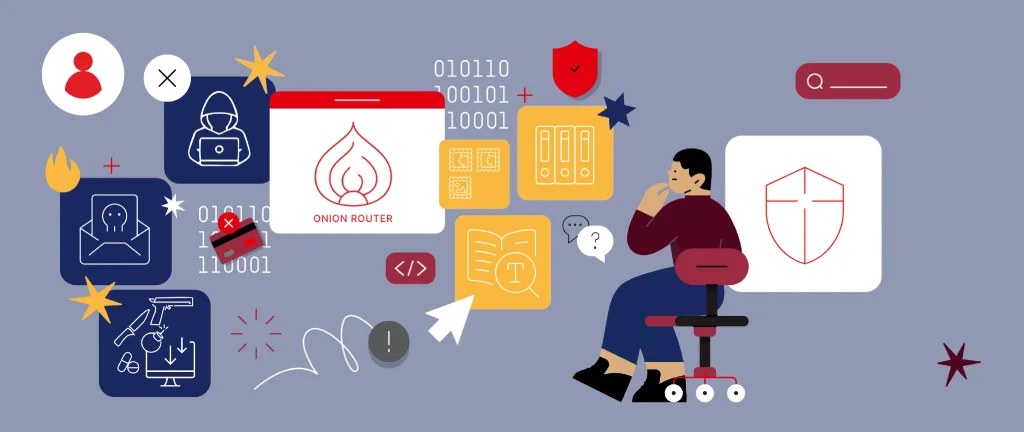
This is probably the question most people have and get the least honest answer to.
Accessing the Hidden Wiki itself is not illegal in most countries. Visiting a directory of links, even a directory that includes links to illegal content, is generally not a crime. The act of browsing is protected in most democratic societies.
However, several important caveats apply.
What you do after accessing the Hidden Wiki can absolutely be illegal. Purchasing drugs, hiring a hacker, downloading illegal content, buying stolen financial data, or accessing child sexual abuse material are crimes regardless of whether you got there through the Hidden Wiki or any other path. The directory is not a legal shield.
The legality of simply using Tor varies by country. In the United States, the United Kingdom, most of Europe, and much of the world, using Tor is perfectly legal. In countries like China, Iran, Russia, and North Korea, using Tor is either restricted or outright illegal, and people face real risks for doing so.
Researchers, journalists, cybersecurity professionals, and law enforcement agents routinely access the dark web and the Hidden Wiki as part of legitimate professional work. Academic papers, news investigations, and security research are all regularly produced based on dark web observation.
The key legal principle is simple: what you access and what you do matters far more than the tool you use to get there.
How to Stay Safe If You Access the Dark Web
If you decide to explore the dark web for legitimate purposes, such as research, journalism, professional security work, or simple curiosity, there are non-negotiable safety practices to follow.
Use the official Tor Browser, downloaded only from the Tor Project’s official website. Never download it from third-party sources, as modified versions may contain malware or tracking code.
Keep JavaScript disabled in the Tor Browser’s highest security setting. Many dark web exploits work through JavaScript vulnerabilities.
Never use your regular accounts or provide any identifying information. Don’t log into Google, social media, or anything connected to your real identity while on Tor.
Use a separate device if possible, or at a minimum, a clean user profile. Keeping your dark web browsing completely separate from your regular browsing reduces the risk of accidental data leakage.
Do not download files from dark web sources unless you are highly confident of what they contain and have proper sandboxing in place. Files from unknown sources are a primary vector for malware.
Never access content you know or suspect to be illegal. This sounds obvious, but the structure of the Hidden Wiki means you may encounter such links simply by reading the directory. Avoid clicking on links to content categories that are clearly illegal.
The Hidden Wiki Today: What’s Changed
The Hidden Wiki of 2026 is meaningfully different from the Hidden Wiki of 2010 or even 2015. Law enforcement operations have become significantly more sophisticated. Agencies in the United States, United Kingdom, Germany, and elsewhere have developed substantial expertise in dark web investigations, resulting in major takedowns, arrests, and prosecutions.
The cryptocurrency tracing tools available to investigators have improved dramatically. Bitcoin, once thought to be essentially untraceable, is now routinely traced by blockchain analysis firms working with law enforcement. This has pushed serious criminal operations toward more privacy-focused cryptocurrencies. But it has also resulted in many arrests that were previously thought impossible.
Many of the most notorious dark web marketplaces have been taken down or turned into law enforcement honeypots. The Silk Road was seized in 2013. AlphaBay and Hansa were taken down in 2017. Dozens more have followed.
The Hidden Wiki has fragmented further. There is no single dominant version with the kind of name recognition that earlier versions had. Instead, there are dozens of mirrors of varying quality, completeness, and safety. Some are genuinely curated and focused on legitimate resources. Others are poorly maintained and riddled with dead links. Others still appear to be maintained by people with clearly malicious intent.
The dark web is simultaneously smaller than people imagine in terms of legitimate utility and larger than people imagine in terms of overall size. By various estimates, the Tor network hosts tens of thousands of .onion sites, but the majority are either inactive, extremely low traffic, or not accessible to the general public.
Frequently Asked Questions
Q: Is the Hidden Wiki still active in 2026?
Ans: Yes, multiple versions and mirrors remain active. The specific .onion addresses change regularly as sites go down and new mirrors are created.
Q: Is the Hidden Wiki the same as the dark web?
Ans: No. The Hidden Wiki is a directory that lists websites on the dark web (specifically the Tor network). The dark web is the broader ecosystem of hidden websites.
Q: Will using the Hidden Wiki get you in trouble?
Ans: Simply reading the directory is unlikely to result in legal trouble in most countries. Accessing or engaging with illegal content that it links to is a different matter entirely.
Q: How do criminals use the Hidden Wiki?
Ans: As a directory to find illegal marketplaces, services, and forums. However, sophisticated criminal operations typically don’t rely on widely-known directories like the Hidden Wiki — they operate through invitation-only networks and private referrals.